
Dermatology is a visual specialty. Nearly every diagnosis, monitoring decision, and treatment plan depends on dermatology imaging. Yet despite its importance, dermatology imaging is often inconsistent across visits, providers, and devices. When dermatology imaging isn’t standardized, the damage doesn’t happen all at once, but several critical elements begin to break almost immediately.
The Purpose of Dermatology Imaging
The first thing to break is longitudinal comparability. Dermatology imaging only delivers clinical value when images can be reliably compared over time. Changes in lighting, camera distance, patient positioning, or field of view introduce uncertainty. A lesion may appear larger, darker, or more irregular simply because the image capture conditions changed. Without standardized dermatology imaging, clinicians are forced to rely on subjective judgment rather than objective visual evidence.
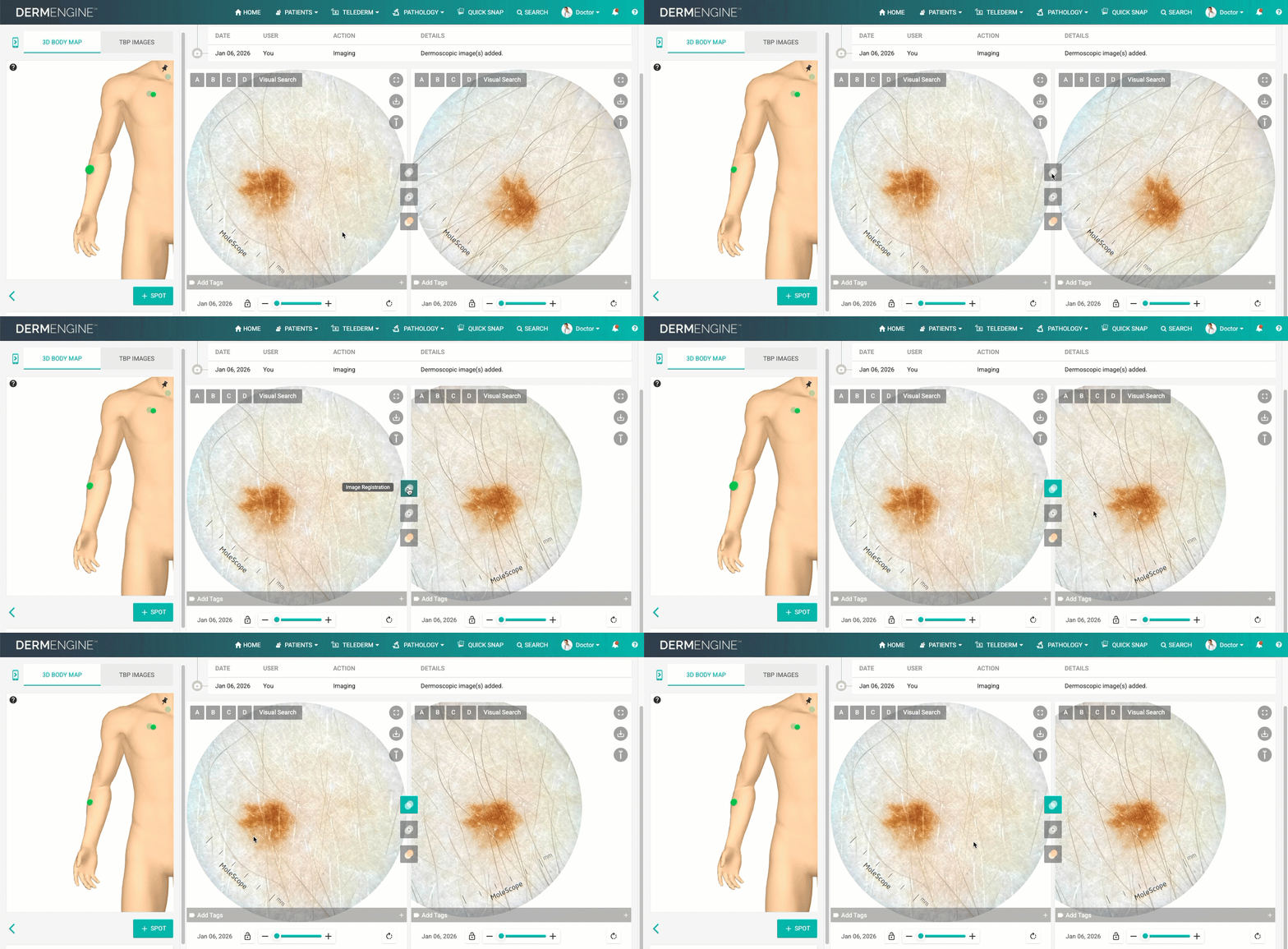
The importance of standardization is the ability to compare.
Furthermore, scale disappears. With no ruler/coin/marker, “2 mm” becomes “maybe 6 mm?” and nobody can prove it later. Without a proper imaging system, framing breaks context. Close-ups without anatomic landmarks means nobody knows where on the body it was (or which side).
Certain intelligent dermatology systems, like DermEngine, provide a 3D body model to place marked lesions on so it is never missed. When combined with MoleScope, an affordable smartphone dermatoscope, the lesion is measured against a millimeter marker within the tool so that size and scale are always available.
Clinical Efficiency and Care Continuity
Next, clinical efficiency erodes. Reviewing non-standardized dermatology imaging requires extra cognitive effort. Is this the same angle? Is this zoomed differently? Is this truly change or just variation? What should be a quick review becomes a slow, mentally taxing process repeated dozens of times per day. Over time, this inefficiency contributes directly to clinician fatigue.
For patients, they expect continuity in their care. When dermatology imaging looks dramatically different from one visit to the next, it becomes harder to communicate stability or change with confidence. Explaining why two images of the same area appear unrelated can introduce doubt at precisely the moment reassurance is needed most.
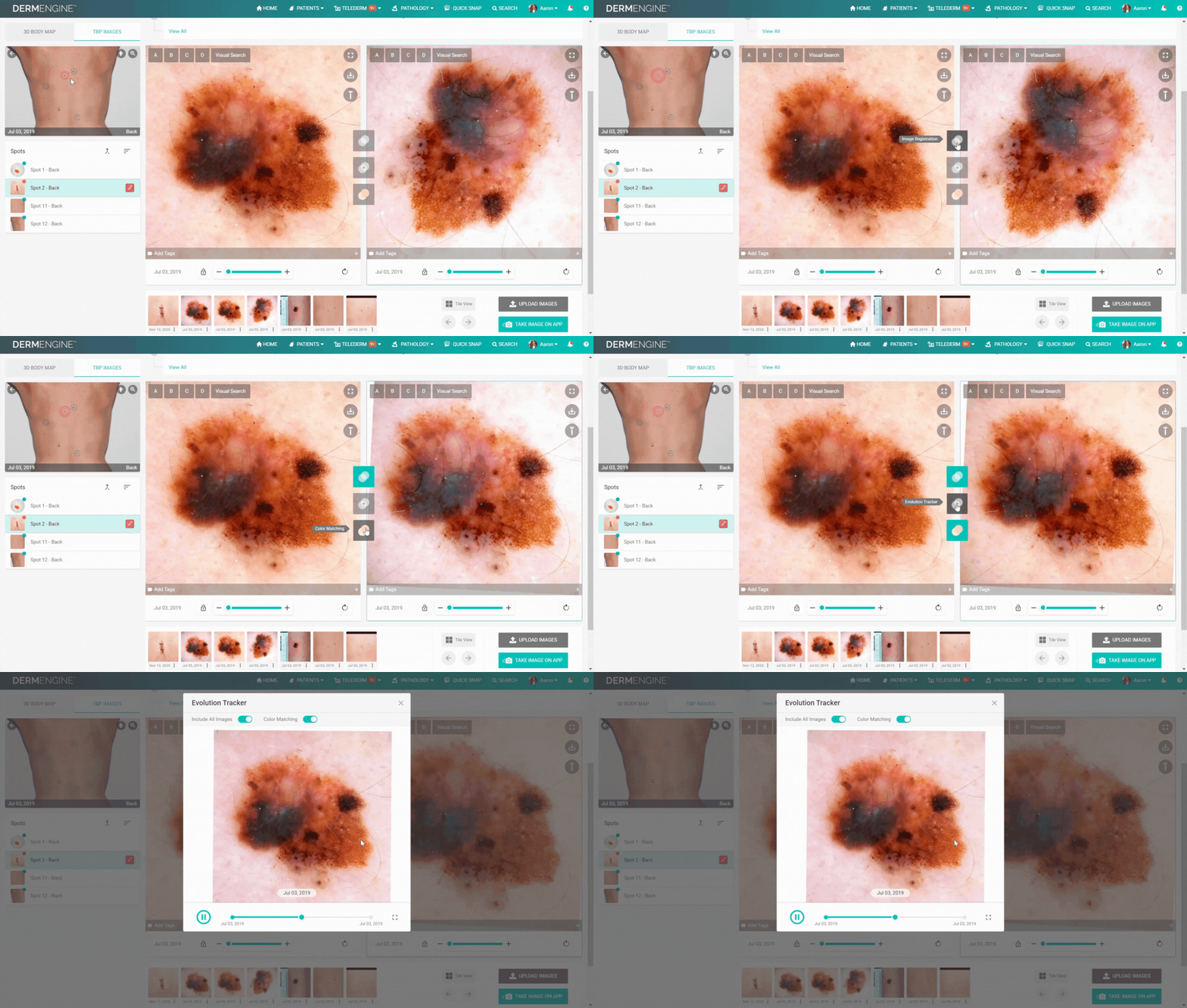
DermEngine’s image registration and colour matching tools help standardize images taken from different appointments.
Scalability
Finally, scalability breaks down. As practices grow, add providers, or expand across locations, inconsistencies in dermatology imaging multiply. Without standardization, each clinician and site develops its own habits, leading to fragmented workflows and uneven care quality. At scale, this fragmentation limits the effectiveness of both skin imaging software and emerging AI-driven tools.
Skin imaging software—whether used for lesion tracking, mole mapping, or clinical review—depends on consistent image inputs. When dermatology imaging varies widely, software outputs become less reliable, reducing clinician trust in digital tools. In many cases, the limitation isn’t the skin imaging software itself, but the lack of standardized imaging feeding into it.
Conclusion
Standardized dermatology imaging is not about visual perfection, but about dependable patient care. It enhances longitudinal assessment, reduces cognitive load, strengthens documentation, and enables modern skin imaging software to deliver meaningful value. When dermatology imaging isn’t standardized, many things suffer—but comparability, efficiency, trust, and scalability are the first to break.
-The MetaOptima Team
Thanks for reading! Curious about how DermEngine can improve your practice?

Topics: DermEngine Skin Cancer Imaging Artificial Intelligence in Dermatology Digital Dermoscopy Skin Imaging System Dermatology Imaging
Register for a Free Online Demo
Curious about how DermEngine can benefit your practice?

Talk to a product specialist and have all your questions answered.